


 Home
Home About Us
 Treatments
 Health Tourism
 FAQ
FAQ Videos
 Contact Us
 Whatsapp
 Call Us


Liposuction (Fat Removal)
Liposuction, also known as 'fat removal', is one of the most preferred cosmetic applications in recent years. Liposuction is the process of removing the fat tissues accumulated in certain parts of the body through a small hole with the help of a vacuum using a cannula.
After puberty, the number of fat cells in a person's body does not change. While gaining weight throughout life, where the fat will be stored depends on the number of fat cells in that area. Excess weight in areas such as waist, hips, inner legs, etc. actually does not depend on excess weight, but on body shape and fat accumulation in these areas.
Liposuction is a surgical method performed to remove resistant fat tissues that do not respond to diet and other weight losing methods in certain parts of the body such as the abdomen, thighs, hips, waist and hips and to better shape the body contours. The goal is not for the person to lose weight. Liposuction is not a type of weight loss surgery; it is not used for the treatment of obesity.
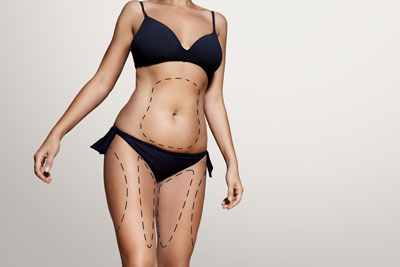
Liposuction is a body contouring surgery. It is also called 'body sculpting', 'body contouring', 'suction lipectomy'. This application is an ideal method for body shaping and regional thinning. It can be applied to provide regional thinning wherever there is stubborn fat accumulation. Cheeks, chin, neck, upper arms, chest, back, waist, abdomen, hips, buttocks, thighs, inner side of the knees and ankles are the areas where liposuction is safely and frequently applied. It is only possible to get rid of unwanted fat accumulation, to achieve a proportional fat reduction, and to achieve ideal body contours with liposuction. Liposuction is the permanent removal of excess fat in certain areas of the body and giving the body the desired shape.
 What is liposuction?
Liposuction is the process of removing the fat tissues accumulated in certain parts of the body through a small hole with the help of a vacuum using a cannula.
What does liposuction do?
Liposuction is a surgical method performed to remove resistant fat tissues that do not respond to diet and other weight loss methods in certain parts of the body such as abdomen, thighs, hips, hips, waist, hips and to better shape body contours. Liposuction is applied to permanently remove excess fat from certain areas of the body and to give the desired shape to the body.
Are there different types of liposuction?
There are 5 types of liposuction:
• Classical liposuction: It is the removal of fat by vacuum method using cannulas.
• Laser liposuction: Low-energy laser waves are used to melt the fat.
• Vaser liposuction: Fats are separated using sound waves (ultrasound).
• Bodyjet method: Fats are separated by spraying liquid from the tip of the cannula.
• RFAL (radiofrequency assisted liposuction): By using thermal energy, both the skin is tightened and unwanted fat is melted.
Am I a suitable candidate for liposuction?
Anyone who does not have a serious health problem, is not pregnant or breastfeeding can have liposuction. You are a suitable candidate for liposuction if you are complaining of fat that does not go away in the body despite dieting and exercise and is deposited in certain areas.
 There is no age limit for liposuction. However, the chances of getting effective and desired results are higher with liposuction applied on skin that has not yet lost its elasticity.
Who should not have liposuction?
Liposuction is not recommended for people with diabetes, serious heart or lung disease and circulatory problems.It is also not recommended for those who have recently undergone another surgery in the area where liposuction will be performed.
What are the risks of liposuction?
There are a number of potential complications that may occur after liposuction:
• Contour irregularities
• Fluid accumulation
• Numbness
• Infection
• Fat embolism
• Lidocaine toxicity
The most risky of these are infection and fat embolism. These complications are rare but serious.
What should I do before liposuction?
It does not require a special diet. It is recommended to avoid blood thinners, aspirin, anti-inflammatory drugs, herbal teas, and to stop drinking alcohol and smoking at least one week before the operation.
Step by step operation process
Anaesthesia: General anaesthesia or sedation anaesthesia is given.
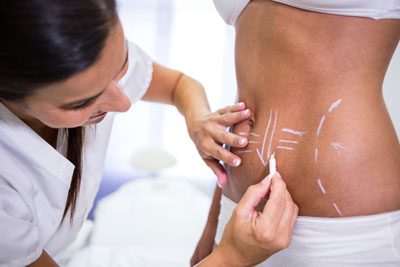
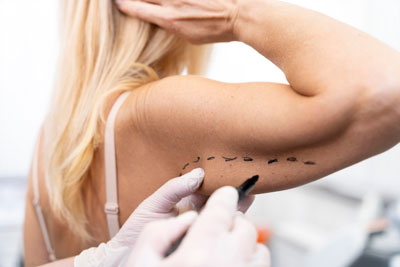
Surgical procedure: Your physician draws and marks the areas to be operated on during the examination. The procedure is performed with small incisions of 3-4 mm in length, through which only the thin cannulas used for fat removal can enter. The required amount of fat determined by your physician to achieve the ideal contours is aspirated through cannulas and removed from the body. Which the type of liposuction will be used is planned according to the amount of fat and skin elasticity.
Do the energy modalities used for liposuction have a place in the success of the operation?
No, they do not. There is no scientific data that any energy modality is better than the other. More important than the energy type used for liposuction is the experience and skill of your plastic surgeon. Does your physician have a correct perspective to create a beautiful, aesthetic body contour? Can she/he remove fat from the right place in accordance with the planned goal? In the right hands, excellent results are obtained with all kinds of techniques.
 What should I expect after liposuction?
When you are leaving the operation room, you will be wearing a corset.After the operation, there may be bruising, swelling, tension, itching and pulling sensation in the fat removal areas. It takes 2 weeks for the bruises to disappear. It takes 6 to 8 weeks for the swelling to completely subside and the final result to appear.
There is no pain at rest; pain may be felt when there is a contact with the operation site or when moving. This pain can be easily relieved with simple painkillers.
What should I pay attention to after liposuction?
Resting at home for a week is sufficient.
You can take a shower about 3 to 4 days after the operation.
The corset is used for 3 weeks. This corset is used to limit oedema and to provide better shaping of the fat removal area.
Alcohol should not be consumed for at least two weeks after liposuction.
After the operation, you should organise your diet to accelerate wound healing. Firstly, you should consume plenty of water and eat a protein-rich diet.
It is recommended to sleep on your back for the first 3 weeks. However, if liposuction is performed on the buttocks or both abdomen and back, you can lie on your side.
How long is the recovery period after liposuction?
You can start daily activities within 2 to 3 days.
When can I return to work after liposuction?
You can start work after one week.
When can I start sports after liposuction?
You can start light exercises one week after liposuction and heavy sports one month after liposuction.
What is the healing process after liposuction?
In 3 weeks, the incision scars become indistinct, bruises disappear and the body starts to take its new shape. During this period, massaging the operation sites from where fat is removed, accelerates the circulation, thus allowing the edema to be resolved more quickly. The complete reduction of swelling and the appearance of the final result will be 6-8 weeks later. Healthy lifestyle changes are important for you to achieve your ideal form after liposuction.
What are the advantages of liposuction?
 With liposuction, you can permanently get rid of your excess fat that is resistent to diet and exercise. You will achieve an ideal body contours. You will reduce risk of having striae if you put on weight in the future. Even if you gain weight afterwards, this is minimal in the previously fat removed areas and weight will be evenly distributed. In other words, even if your body expands, deformation of your body contour is prevented. Since the incision on the skin are only 3-4 mm in size, they will almost disappear completely.
Are the results of liposuction permament?
Since the fat cells are permanently removed from the body with liposuction, a permanent and striking improvement is achieved in your body contours. With the right diagnosis, planning and technique, the results of liposuction is ever-lasting. The body contours are not deformed afterwards. Even if you gain weight in the future, fat deposition in the previous areas of liposuction is minimal and proportional.
-
Frequently Asked Question

-
What happens with liposuction?

With liposuction, unwanted excess fat that is resistant to diet and exercise and has accumulated in certain parts of the body can be removed permanently, a proportional fat removal can be achieved and the body takes on an ideal body contour.
-
Who is a good candidate for liposuction?
Anyone who does not have a serious health problem, who is not pregnant or breastfeeding can have liposuction. If you are complaining about the fat that does not go away in the body and accumulates in certain areas despite diet and exercise, you are a suitable candidate for liposuction.
-
How old do I have to be for liposuction?
You must be over the age of 18 for any voluntary cosmetic intervention.
-
Can liposuction be applied at older ages?
There is no upper age limit for liposuction. However, the chance of getting effective and desired results is higher with liposuction applied on skin that has not yet lost its elasticity. As we age, the firmness and elasticity of the skin decreases. Therefore, the ability of the skin that has lost its elasticity to cover the newly shaped body contours harmoniously decreases.
-
Who should not have liposuction?
Liposuction is not recommended for people with diabetes, serious heart or lung disease and circulatory problems. It is also not recommended for those who have recently undergone another surgery in the area where liposuction will be performed.
-
Is it possible to treat obesity with liposuction?
Liposuction is not a weight loss surgery; it is not used in the treatment of obesity.
-
Is liposuction a good way to lose weight?
Liposuction is not a weight loss method. It is not aimed to lose weight. In most patients who have already undergone the procedure, only 1-2.5 kg. weight loss occurs.
-
When is liposuction useful?
Liposuction is the permanent removal of excess fat in certain parts of the body and giving the body the desired shape. For this reason, excess weight should be lost first with diet and exercise, and the body should be shaped. Afterwards, liposuction application is more beneficial to get rid of the remaining unwanted fat accumulation images, to provide a proportional reduction, and to achieve ideal body contours.
-
Which areas is liposuction applied to?
Cheeks, chin, neck, upper arms, chest, back, waist, abdomen, buttocks, hips, thighs, inner side of the knees and ankles are the areas where liposuction is safely and frequently applied.
-
Can liposuction be performed on the face?
Yes. Face, cheeks, chin and neck are the areas where liposuction is applied.
-
Which anaesthesia is used for liposuction?
The operation is performed in a hospital environment under sedation anaesthesia or general anaesthesia, depending on the amount of fat to be removed and the area to be applied.
-
How long does liposuction take?
Generally liposuction takes 1-1.5 hours depending on the number of areas to be removed and the intensity of fat accumulation.
-
How is liposuction surgery performed?
Your physician draws and marks the areas to be operated on during the examination. The procedure is performed with small incisions of 3-4 mm in length where only thin cannulas to be used for fat removal can enter. The required amount of fat determined by your physician to achieve the ideal contours is aspirated through cannulas and removed from the body. Type of liposuction is planned according to the amount of fat and skin elasticity.
-
Which body parts can be treated with liposuction?
Cheeks, chin, neck, upper arms, chest, back, waist, abdomen, buttocks, hips, thighs, inner side of the knees and ankles are the areas where liposuction is safely and frequently applied.
-
What is the best season for liposuction?
Liposuction can be performed in any season. However, hot weather may be uncomfortable as a corset will be used for the first 3 weeks.
-
Can liposuction be performed in the summer?
Liposuction can be performed in all seasons. However, since a corset is used after the surgery, extremely hot weather can be uncomfortable. Nevertheless, if you do not have to walk around outside and you will be in a cool environment during the healing process, there is no harm in performing the surgery in summer. Swimming in the sea or pool does not cause any problem after liposuction.
-
How painful is liposuction?
No pain is felt when resting after liposuction. However, pain may be felt if there is contact with the operation area or when moving. This pain respond to simple painkillers.
-
What should be done for water retention (oedema) after liposuction?
In order to limit swelling due to oedema after liposuction and to ensure less oedema formation, a corset is worn immediately after leaving the operating theatre and corset use is recommended for the first 3 weeks.
-
Is there a lot of oedema after liposuction?
The amount of oedema is maximum in the first 48 hours after liposuction. Most of it regresses within a week.
-
How long does the swelling last after liposuction?
In general, swelling disappears in 4 months. However, 10% stays for 6 to 9 months, albeit mildly.
-
How tight should the pressure garment (corset) be after liposuction?
The pressure garment should exert enough pressure on your body so that it lies flat and smooth. In general, it should be tight enough for a hand to enter between the body and the corset without difficulty.
-
Is a drain needed after liposuction?
Rarely, drains can be placed in the operation area through the cannula holes to prevent blood and serum accumulation in the operation area. They are usually removed within 24 hours.
-
What should I avoid after liposuction?
After liposuction, you should not be standing up still, blood thinners should not be used, you should not exercise outside the recommended exercise timing, you should not stay in the bathroom for a long time, you should not forget to consume plenty of fluids, you should not remove the corset without your physician's recommendations and you should not eat unhealthy.
-
When can I shower after liposuction?
It is possible to shower approximately 3 to 4 days after the operation.
-
How should I sleep after liposuction?
If you sleep on your side after liposuction, your incision sites will remain under pressure due to gravity. Therefore, it is recommended to sleep on your back for the first 3 weeks. However, if liposuction is performed on the buttocks or both abdomen and back, you can sleep on your side.
-
How long can I not drink alcohol after liposuction?
Alcohol should not be consumed for at least 2 weeks after liposuction.
-
How should I eat after liposuction?
You should adjust your diet to accelerate wound healing after liposuction. First of all, you should consume plenty of water and eat a protein-rich diet. Apart from red meat, other protein sources are green leafy vegetables, fish, whole grains, nuts and legumes. You should also take foods containing vitamin D, which strengthens the body's defence system, and magnesium, which suppresses inflammation.
-
Why do I have to drink a lot of water after liposuction?
Drinking plenty of water after the operation is recommended as it accelerates wound healing.
-
Which foods should I avoid after liposuction?
After liposuction, you should avoid high calorie foods that delay tissue healing. These are foods rich with sugar and saturated fat. For example, - Fried foods - Baked goods - Carbonated drinks - Prepared foods (fast food) - Sugary cereals - Processed meats such as sausage, salami or bacon - Refined grains such as white bread, pasta, rice and crackers - Spicy foods - Alcohol
-
How to dress after liposuction?
You should wear a corset according to your physician's recommendation. Apart from this, you should prefer comfortable clothes as there will be swelling in your surgery area after liposuction. In the first days, loose clothes such as loose shirts, sweatpants, pyjama bottoms and even bathrobes are more useful. It is not recommended to wear tight clothes such as tights and jeans for the first 3 months after the procedure.
-
When can I return to daily life after liposuction?
You can do your daily work within 2 to 3 days.
-
When can I return to work after liposuction?
Return to work is at the end of one week.
-
When can I exercise after liposuction?
You can start light exercises after one week. However, you should avoid heavy sports for a month.
-
When can I start walking after liposuction?
You can start walking immediately after the procedure.
-
Is it good to walk after liposuction?
It is not necessary to keep staying in bed after liposuction, on the contrary, the sooner you start moving, the faster the healing process will be. Mobility accelerates your blood circulation, reduces the tendency of blood to clot and increases the amount of oxygen carried to the tissues.
-
When will I fully recover after liposuction?
You can return to daily life within 2 to 3 days. Return to work is at the end of a week. The swelling will be completely reduced and the final result will be seen after 6 to 8 weeks.
-
Are there any scars after liposuction?
Since liposuction is a surgical procedure performed with incisions smaller than 1 cm in length, it is usually difficult to find suture scars after liposuction. The incisions have a pinkish colour for the first year, but over time they take the natural colour of the skin. Liposuction incisions are usually hidden in a natural fold of the skin to make them less noticeable.
-
How much weight will I lose after liposuction?
Most patients leave the hospital with 1-2.5 kg weight loss. In fact, the most ideal liposuction candidates are those who are around 30% of their healthy weight range and want to get rid of regional fat deposits.
-
Does liposuction treat cellulite?
Cellulite is a typical bulbous, dimpled skin appearance caused by subcutaneous fat tissue pushing the connective tissue under the skin. Liposuction only removes fat from the body, it has no direct effect on the skin or other tissues. Therefore, it does not change the appearance of cellulite.
-
Can I get pregnant after liposuction?
Yes, you can. Having liposuction does not prevent you from getting pregnant. The weight you will gain during pregnancy accumulates minimally in the areas where liposuction is applied and is distributed proportionally to the body.
-
Is liposuction permanent?
Liposuction provides a permanent and striking improvement in your body contours as the fat cells are permanently removed from the body. When applied with correct diagnosis, correct planning and correct technique, the result is permanent.
-
Does the fat removed by liposuction come back?
Fat cells removed from the body with liposuction do not come back. Therefore, liposuction is permanent. However, you still have fat cells in your problematic body sites. If you continue to consume excess calories, fat may accumulate again in your remaining adipose tissue as the filling capacity of fat cells continues. It is therefore important to implement healthy lifestyle changes.
-
Should I lose weight before liposuction?
Yes. Liposuction is applied to resistant fat tissues that do not respond to diet and exercise. You should first try to lose weight so that the remaining fatty areas in the body will be more prominent and the body contours will be shaped better with liposuction applied to these areas.
-
What is the ideal weight for liposuction?
You do not need to be at a certain weight for liposuction. However, it is recommended to be at your target weight. Most plastic surgeons recommend you to be within 30% of your target weight.
-
When do liposuction results appear?
In general, the results become evident in 6 to 8 weeks.
-
What happens to fat after liposuction?
The fat tissue removed from your body with liposuction does not come back. However, some fat tissue remains behind in the areas where liposuction is applied. The fat cells in this tissue continue to have the potential to fill with fat.
-
What are the side effects of liposuction surgery?
There are a number of potential complications that may occur after liposuction: - Contour irregularities - Bleeding - Fluid accumulation - Numbness - Infection - Fat embolism - Lidocaine toxicity
-
Why is liposuction dangerous?
The most risky side effects of liposuction surgery are infection and fat embolism. These complications are rare but serious.
-
What are the advantages of liposuction surgery?
With liposuction, you can get rid of excess fat that is resistant to diet and exercise. You will have ideal body contours. The risk of stretch marks that may occur due to weight gain in the future is minimal. Even if you gain weight, this is minimal in the areas where liposuction is applied and the weight gained is distributed proportionally. So, even if you put on weight, the body contour is nor deformed. Since 3-4 mm-long-incisions fade completely, there is no visible scar left on the incision sites.
-
How long should I rest after liposuction last?
One week of rest at home is sufficient. You can return to daily life in 2 to 3e days, and you can start working after a week.
-
Can liposuction be combined with other surgeries?
Liposuction can be combined with other surgeries according to your needs. For example, in order to get the desired result in skin that has lost its elasticity, operations such as skin stretching may be needed in addition to liposuction surgery.
-
Is liposuction good for loose skin?
In addition to excess fat accumulation under the chin or on the belly, there may also be sagging skin. In these cases, liposuction causes more sagging in the skin. In this case, the skin that has lost its elasticity needs additional tightening procedures.
-
Can I have liposuction again?
In principle, there is no harm in repeating liposuction. However, since the results are permanent and will be distributed proportionally even if weight is gained in the future, it is not necessary to repeat it in the same area.
-
How often can I have liposuction?
Since each patient has a different healing process, it is recommended to wait 6 to 8 months before another liposuction. Before deciding on another liposuction procedure, it is best to clearly determine the fat ratio remaining after healing and wait for the body contours to settle.
-
How many times can you have liposuction?
You can have liposuction in different areas at 6-8 month intervals.
-
How many times can you have liposuction in the same area?
There should not be a need for a second liposuction procedure in the same area because liposuction is performed to permanently remove excess fat in certain areas. When applied with the correct diagnosis, correct planning and correct technique, the result is permanent. The body shape is not deformed again. If there is excess fat accumulation in the same area, second liposuction is possible, but there is a risk of an irregular appearance after healing.
-
Can liposuction be performed without surgery?
Apart from the process of fat removal by vacuum method through cannulas, which we call 'classical liposuction', there are also methods in which fat is separated using various energy modalities. These methods use laser, sound waves, liquid or thermal energy.
-
What is Lipo 360?
The liposuction procedure performed in a way to surround the middle part of the body 360 degrees is called 'Lipo 360'. The areas where Lipo 360 is applied are the upper and lower abdomen, the flanks on both sides and the lower and middle back.
-
How much fat can be removed with Lipo 360?
The maximum amount of fat removed with Lipo 360 is 5-8 litres.
-
Why massaging after liposuction?
A massage is recommended to reduce postoperative oedema, to ensure rapid regression of oedema and to prevent fluid accumulation between tissues.
-
Which massage is done after liposuction?
Lymphatic drainage massage is recommended after liposuction. It is started 3 days after the operation. Doing it after a shower increases the effectiveness of lymphatic massage.
-
Does liposuction create a sagging skin structure?
If the skin structure has not lost its elasticity and a large amount of fat has not been removed from the body, there is no sagging skin appearance after liposuction.
-
How long does it take for your skin to settle back into place after liposuction?
It can take anywhere from 4 weeks to 6 months for the skin to settle back into place, depending on the amount of fat removed and how much skin is left behind.
-
When does the skin tighten after liposuction?
Depending on the amount of fat removed, the skin in the treated area tightens between 1 and 3 months after liposuction.
-
Why does my skin become hard after liposuction?
In any case where the integrity of the skin is compromised, depending on your skin type, skin hardness may occur. If this condition develops after liposuction, it is called 'fibrosis after liposuction'. Hardness is usually seen near the cannula incision site.
-
What is fibrosis after liposuction? How does it develop?
Fibrosis after liposuction is the appearance of extra fibrous tissue due to abnormal tissue formation during healing. Fibrosis also causes hardening of the area by swelling the surrounding tissues. It can also occur in the form of bruises or painful lumps. Fibrosis after liposuction is basically a circulatory problem. The most common cause is increased collagen production or the death of a fatty area due to lack of blood supply (necrosis).
-
What is Vaser liposuction?
Vaser liposuction only breaks down fat tissue with sound waves (ultrasound) and does not damage other tissues. Thus, there is less bleeding and pain. Since it breaks down the fat very well, a smoother skin surface is obtained. With Vaser, 3-dimensional structures called 'high definition body sculpting', such as abdominal muscles, can be obtained by shaping the existing fat. Again, it is possible to make a thinner waist or arm muscle appearance.
-
What is lipoedema?
Lipoedema is a disease of fat accumulation involving the vascular, nervous and lymphatic systems with a genetic background. There is no existing oedema, there is thickening in the fat layer. It is also known as 'excessive fat syndrome'. It is a painful condition. It is almost only seen in women. Excessive fat and thickening under the skin is seen in the entire leg up to the hip, hip, ankle.
-
How does lipoedema begin?
The first signs of lipoedema appear in adolescence and then progress with age. The cause is not known exactly.
-
What are the symptoms of lipoedema?
The most common patient complaints are as follows: - Feet are not affected, hips, buttocks, thighs and the whole leg are affected bilaterally. - When the swellings on the legs are pressed with a finger, there is no pitting. - Lipoedema areas are painful and cold when touched and pressed. - In lipoedema, bruising occurs easily with a slight trauma to the skin. - Even when lipoedema patients lose weight, there is no or very little thinning in the legs.
-
Can lipoedema go away?
Lipoedema may be associated with hormone disorders and some chronic diseases. Lipoedema may regress when these underlying conditions are treated.
-
How is lipoedema treatment performed?
In the treatment of lipoedema, varicose veins and compression stockings and physiotherapy options are offered, but they do not have much effect.
-
What can you do yourself against lipoedema?
You can watch your diet. Eating less salt can support the treatment to some extent. Compression garments and lipoedema stockings increase the flow of blood and lymph fluid in the lymphatic system, helping to delay oedema in the tissues and the onset of lymphoedema. Although they reduce pain and improve mobility, they are not curative.
-
When is lipoedema operated?
Since the only effective treatment today is liposuction, people with increasing complaints may undergo surgery.
-
Which liposuction method is recommended for lipoedema?
The most effective liposuction method in the treatment of lipoedema is Vaser liposuction, which does not cause damage to the lymph vessels. Thus, it is possible to remove the problematic tissue from this area. Vaser liposuction performed in the early stages of lipoedema is much more effective.


Duration of stay
5-6 days
Length of hospital stay
1 day. 3-4 hours if no additional surgery or too much fat is removed
Surgery time
1-1.5 hours
Type of anesthesia
Sedation anesthesia or general anesthesia
Recovery time
1 week
Follow-up
1 day after surgery
